GFN•TV will bring the conference's platform for rational and inclusive debate on the future role of safer nicotine products and tobacco harm reduction to an audience all year round. GFN•TV will also be broadcasting live from Warsaw in June. Tune in to hear world-leading experts, tobacco harm reduction advocates and nicotine consumers discuss the latest scientific, regulatory and policy developments. From our unique annual event, to year-round reporting of the issues that matter in tobacco harm reduction, GFN has got it covered.
Can Governments Enforce Their Way Out of the Illicit Market Crisis? | #GFN Voices 2026 #4
Can governments enforce their way out of the illicit market crisis?
In this interview, Brent Stafford speaks with Asa Saligupta and Rohan Pike about the consequences of prohibition, the limits of enforcement, and whether tougher government action can truly curb the growing illicit nicotine market.
As restrictions tighten and enforcement efforts intensify, the black market continues to evolve. What is driving its growth, and could current policies be making the problem worse?
📅 17 Aug 2026
Measuring What Consumers Think, Feel and Do | #GFN26ScienceLab
Understanding what consumers think, feel, and do is essential to generating robust evidence on tobacco and nicotine products. In this GFN Science Lab session, Christelle Chrea discusses the role of consumer-reported outcome measures (CROMs) in tobacco and nicotine research, and the challenges involved in measuring consumer perceptions, behaviours, and experiences.
The session explores the distinction between descriptive measures, which capture observable behaviours such as product use and frequency, and psychometric measures, which assess underlying constructs such as risk perception, dependence, and other cognitive, perceptual, and affective dimensions.
📅 14 Aug 2026
Why Cigarettes Kill And Nicotine Isn't the Reason?
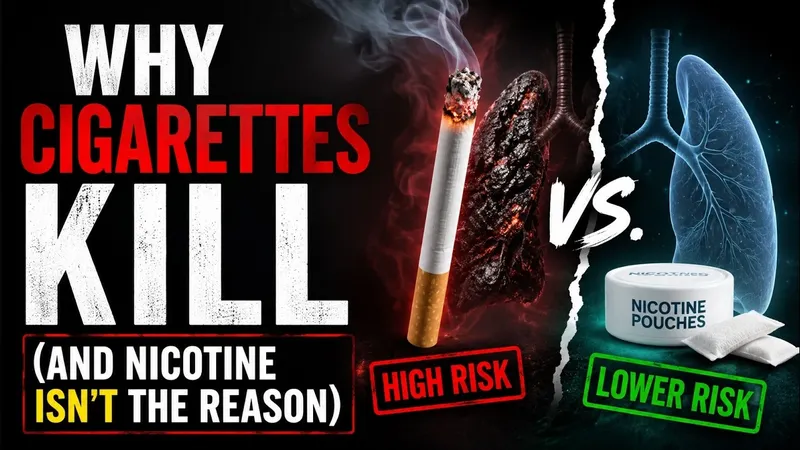
Is nicotine really the substance that causes smoking-related disease? Or has decades of misinformation blurred the line between nicotine and smoke? Dr Mohamadi Sarkar discusses one of the most misunderstood topics in tobacco control: the difference between the risks of combustible cigarettes and smoke-free nicotine products.
📅 12 Aug 2026
How Prohibition Turned Vaping Into a Illicit Business? | GFN Voices 2026 #3
What happens when a government bans safer nicotine alternatives instead of regulating them? In this GFN Voices episode from #GFN26, Brent Stafford speaks with Dr. Mariana Hoyo (Mexico) and Gina Reyes (Colombia) about how two neighboring countries have taken very different approaches to vaping—and what those policies mean for public health.
📅 10 Aug 2026
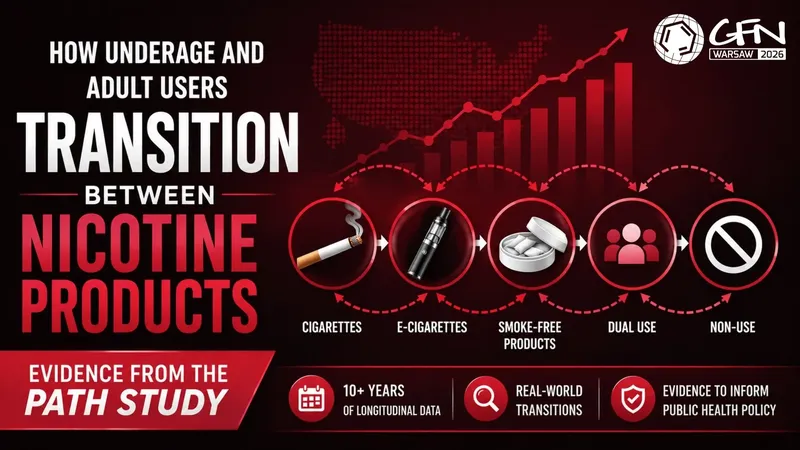
How Underage and Adult Users Transition Between Nicotine Products? | #GFN26ScienceLab
How do people actually transition between different nicotine products over time? Are young people who experiment with e-cigarettes more likely to become smokers, and is dual use a long-term pattern or simply part of the journey away from cigarettes?
Drawing on a decade of data from the U.S. Population Assessment of Tobacco and Health (PATH) Study, this presentation explores how nicotine product use changes among both underage and adult populations. Using longitudinal evidence that follows the same individuals over time, it examines real-world transitions between cigarettes, smoke-free products, dual use, and non-use.
📅 7 Aug 2026
GFN.TV Interviews #93 | FILLING THE VOID | Illicit Products Proliferate as FDA Reviews Grind On
Prohibition cannot eliminate consumer demand. It’s an iron rule of free markets. As lower-risk nicotine products remain stuck under FDA review, illicit products proliferate to fill the void. Shot on location at GFN 2026 in Warsaw, Poland, Altria’s Dr. Mohamadi Sarkar argues that slow authorization decisions have left regulators playing enforcement “whack-a-mole” while adult smokers wait for more FDA-authorized alternatives.
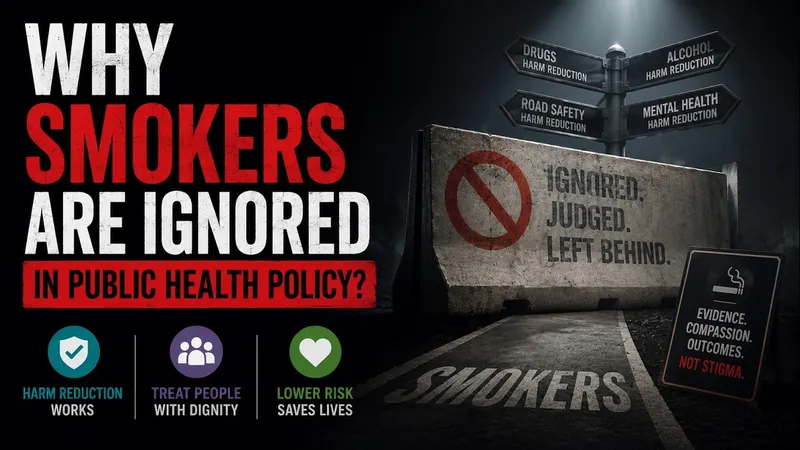
Smoking remains one of the world's biggest preventable killers, yet people who smoke are often denied the same harm reduction principles that have transformed responses to other public health challenges.
If reducing harm works for other risky behaviours, why is it still so controversial when it comes to smoking? The growing evidence suggests that how nicotine is consumed—not nicotine itself—plays the biggest role in determining health risks. Treating adults who smoke with dignity, respecting informed choices, and making lower-risk alternatives available could save millions of lives.
Public health should be driven by evidence, compassion, and outcomes—not stigma.
📅 5 Aug 2026
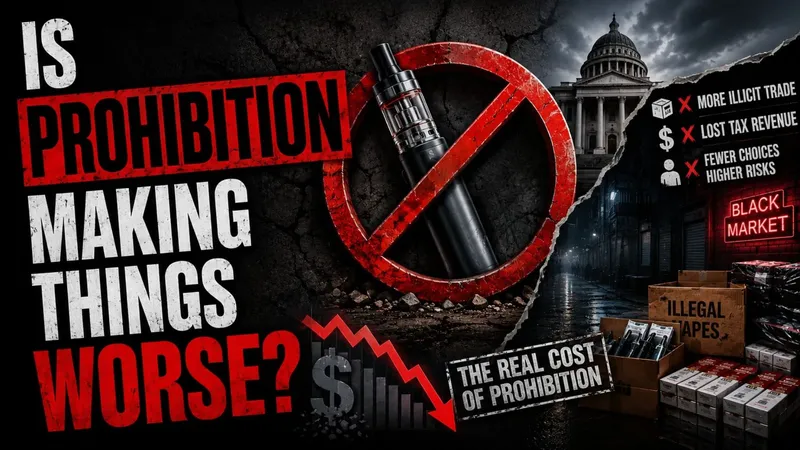
Is Prohibition Making Things Worse? | GFN Voices 2026 #2
The debate over prohibition often focuses on intentions, but the real question is whether restrictive policies achieve their public health goals. As governments around the world consider tighter controls on nicotine and tobacco products, evidence continues to raise important questions about the unintended consequences of prohibition, including the growth of illicit markets, the role of organized crime, lost tax revenue, and reduced access to lower-risk alternatives for adults who smoke.
📅 3 Aug 2026
Which Nicotine Pouch Formula Stays More Stable? | #GFN26ScienceLab
How much nicotine remains in a nicotine pouch after months of storage? And can formulation design improve long-term stability?
In this presentation, Anna Balconi explores preliminary research comparing conventional microcrystalline cellulose (MCC)-based nicotine pouches with a novel semi-gel-based formulation developed by Alchem NicSelect. The study examines how nicotine content changes over time and investigates whether different pouch architectures can reduce degradation caused by oxidation and evaporation.
📅 31 Jul 2026
Why Prohibition Is Failing Public Health? | GFN Voices 2026 #1
Despite decades of prohibition, smoking remains one of the leading preventable causes of disease and death worldwide. So why do policies that restrict safer alternatives often fail to improve public health?